




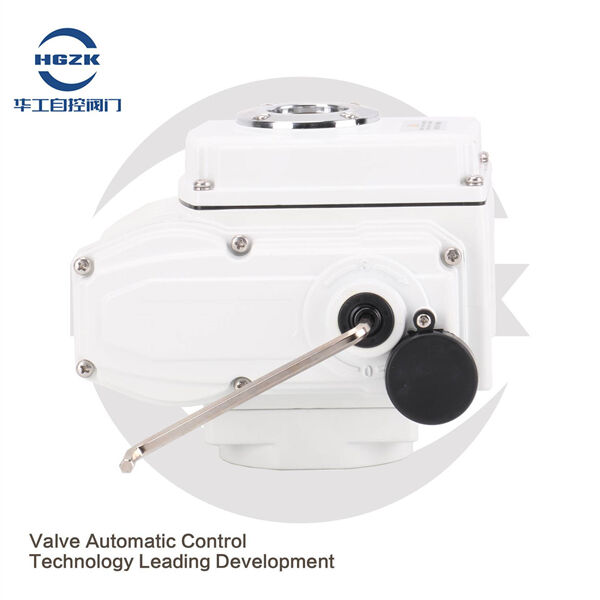
Electric actuators are key components in an array of industries such as manufacturing and automation. They're critical in controlling the passage of machinery and tools by transforming energy to motion. The more you know about how electric actuators work and what they do the better able you’ll be to optimize your applications and increase overall efficiency.
What it is and how it works
An electric actuator is a device that applies electrical energy to drive or move equipment. It is comprised of an electro gear motor and a control system. The rotation round and around caused by the electric motor is sent out via the gearbox to the receiver's output shaft. The speed, torque and position of the actuator are controlled by the control system, achieving accurate and efficient movement. Electric actuators are available in different forms like linear, rotary or multi-turn actuator for their specific purposes.
The electric actuators is then transformed into mechanical work by the electric motor, where the latter actuates said output shaft to carry out a function. The gearbox serves to increase the motor’s torque and control actuator speed, in order to provide a smooth and very precise motion. In conclusion, electric actuators deliver accurate and reliable control of industrial machinery movement and are therefore essential for a range of automation applications.
Investigation on basic performances of electric actuators
Electric actuators perform numerous basic tasks in process industry from positioning, adjusting to moving industrial equipment. Precision Positioning One of the main tasks of electric actuators is positioning, which means that they will move a load to a certain position or angle. This is essential in applications such as actuating valves (open or close), controlling dampers, and positioning robotic arms with high resolution.
Speed control is the other main role of electric actuator giving operators the ability to adjust how fast or slow they would like their actuator to move depending on their application needs. Users are able to reduce wear-and-tear on equipment and optimize system performance by fine-tuning the actuator speed. Furthermore, electric actuators are capable of delivering high torque output which makes them suitable for heavy duty and heavy load applications.
Quality
Safety benefits are another reason why electric actuators are involved since people can pull away hazardous procedure equipment due to the remote features of an actuator and reduce potential safety hazards. electric valve for water the essential applications of electric actuators are vital for boosting productivity, efficiency and safety in a multitude of industrial processes.
Application
Electric actuators themselves distinguish themselves from the other types by precision and accuracy. Electric actuators Compared to pneumatic or hydraulic actuators, operated based on air or oil pressure, electric actuators are one of the most responsive and accurate means of controlling movement and positioning. This level of control is necessary in industries where precision is paramount, such as manufacturing, automotive, and aerospace. Electric actuators have faster response time, can be used in applications where automation is required leading to enhanced productivity and improved efficiency.
Conclusion
As for industrial application, Huagong has a series of electric actuators in order to satisfy various requirements. Our linear actuators are perfect for applications requiring precise positioning with high force capability. Rotary actuators, in contrast, are ideal for activities necessitating rotation like valve function and placement systems. These are durable actuators for industrial use or harsh environments.

