




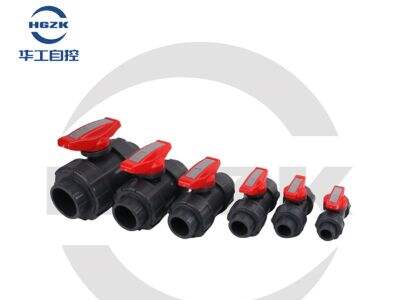
Selecting the appropriate ball valve for your requirements can be tough. This entirely depends on what the intended usage of the valve is and how much you will be using it. As for electric ball valve, there are three main types: manual, pneumatic and electric. They have unique advantages and disadvantages, so it is critical one evaluates the differences between them prior to deciding. Ball Valves
A ball valve in its most basic form is a manual ball valves.
Manages manually by using a handle or wheel to rotate the ball inside the valve. Manual ball valves - they are some of the easiest to use and can often be the least expensive. But they are cumbersome to use in tight spaces, and for finer manipulation.
Pneumatic ball valves, in contrast, are actuated by compressed air. This makes them easier to use compared to a manual ball valve that requires you to turn a handle many times in order for it to open or close. These pneumatic valves types of ball valves are particularly used when there is a lot of necessary flow control in an industrial span. However, they are often more expensive, and can require other necessary gear to operate.
An electric ball valve is the most developed type of the ball valves.
They are actually controlled by a motor, powered by electricity that enables smooth operation of the valve. The fact that you can turn them on and control them by an electronic device makes electric ball valves very useful in applications where automation is desired. But this is the most expensive solution, and electric ball valve may require more maintenance to ensure that they continue working normally.
To determine the right ball valve for your purposes, there are a number of criteria to consider. First, consider what you need the valve for. An electric ball valve might be the better choice if you require specific control of how much or how little your valve allows to flow through. Manual ball valve – This is a cost-effective solution, in case you just need something simple but reliable.
You will need to factor how often the valve is going to be used.
If the valve will be cycled (open and close) often, a pneumatic or electric ball valve is the right choice since it can operate and turnaround faster than manual ball valves. For a valve that gets turned on and off only occasionally, a manual ball valve is likely all that you need.
Last of all, bear in mind the setting where valve will be functioning.
For potentially dangerous or difficult to access areas, an electric ball valve could be the most practical choice because it is operable from a distance. If the valve is going to be in a clean and easily accessible area, a ball valve that must be turned by hand should do.
Conclusion
In conclusion, it is important to consider whether you need a manual, pneumatic or electric ball valve when choosing a ball valve for your use. They each have their own lists of pros and cons, so take the time to think about which will most fit your needs. Taking into account variables like necessary control, how frequently the valve will be used, and where it is meant to operate all help in pushing you to the right answer for you on which ball valves are best.

